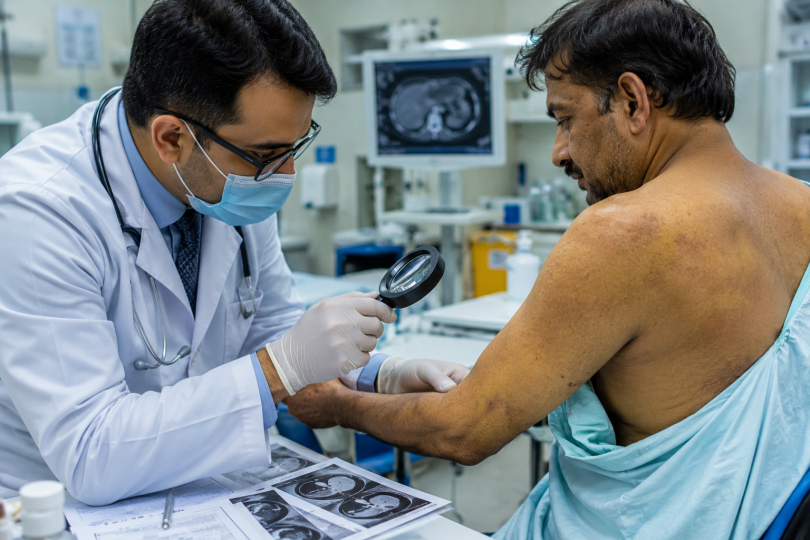

Cutaneous Manifestations CLD are often overlooked despite being among the most visible indicators of chronic liver disease. While liver disorders are usually associated with internal complications, the skin frequently provides important clues about the severity and progression of underlying hepatic dysfunction.
A recent study conducted at Lady Reading Hospital, Peshawar, examined the frequency and clinical predictors of skin manifestations among patients with chronic liver disease (CLD). The findings revealed that skin-related symptoms are extremely common and closely linked to disease severity, viral hepatitis infection, and other clinical risk factors.
These findings highlight the importance of routine dermatological assessments as a simple and cost-effective tool for evaluating patients with chronic liver disease.
Why Skin Changes Matter in Chronic Liver Disease: Cutaneous Manifestations CLD
The liver performs hundreds of vital functions, including detoxification, metabolism, hormone regulation, and protein production.
When liver function declines, its effects are often visible beyond the liver itself. The skin becomes one of the most commonly affected organs.
Changes may occur because of:
- Hormonal imbalances
- Metabolic disturbances
- Vascular abnormalities
- Nutritional deficiencies
- Immune system alterations
- Accumulation of toxic substances
As a result, skin findings can sometimes appear before severe complications develop.
This makes Cutaneous Manifestations CLD an important clinical indicator that healthcare professionals should carefully evaluate.
Understanding the Study: Cutaneous Manifestations CLD
The study was conducted at the Department of Gastroenterology and Hepatology, Lady Reading Hospital, Peshawar, between February 2025 and February 2026.
Researchers enrolled 238 patients with chronic liver disease and collected detailed demographic, clinical, laboratory, and dermatological data.
How Patients Were Evaluated: Cutaneous Manifestations CLD
The research team assessed:
- Age and gender
- Cause of liver disease
- Duration of illness
- Diabetes status
- Alcohol use history
- Clinical symptoms
- Laboratory investigations
- Liver disease severity
The severity of liver disease was classified using the Child-Pugh classification system, a widely used tool for evaluating chronic liver disease progression.
Each patient also underwent a comprehensive skin examination under the supervision of trained physicians and a consultant dermatologist.
Cutaneous Manifestations Were Extremely Common: Cutaneous Manifestations CLD
One of the most important findings was the remarkably high prevalence of skin involvement.
Among the 238 patients studied, researchers found that:
- 196 patients (82.35%) had at least one cutaneous manifestation
- Only 42 patients (17.65%) showed no skin-related findings
These numbers demonstrate that skin changes are not rare complications.
Instead, they represent a major component of the clinical presentation of chronic liver disease.
The high prevalence emphasizes why clinicians should routinely examine the skin when assessing patients with liver disorders.
The Most Common Skin Findings: Cutaneous Manifestations CLD
The study identified several dermatological manifestations associated with chronic liver disease.
Pruritus Was the Most Frequent Symptom: Cutaneous Manifestations CLD
The most common finding was pruritus, affecting:
- 154 patients (64.71%)
Pruritus refers to persistent itching without obvious primary skin lesions.
For many patients, itching can significantly reduce quality of life and interfere with sleep and daily activities.
Jaundice Remained Highly Prevalent: Cutaneous Manifestations CLD
The second most common finding was jaundice, affecting:
- 147 patients (61.76%)
Jaundice causes yellow discoloration of the skin and eyes due to elevated bilirubin levels.
It remains one of the most recognizable signs of liver dysfunction.
Xerosis Affected Nearly Half of Patients
Researchers found xerosis, or dry skin, in:
- 118 patients (49.58%)
Although often underestimated, xerosis can contribute to discomfort and increase susceptibility to skin damage.
Palmar Erythema Was Also Common
Another notable finding was palmar erythema, present in:
- 96 patients (40.34%)
This condition causes redness of the palms, particularly over the thenar and hypothenar regions.
It is often associated with chronic liver disease and vascular changes.
Disease Severity Strongly Influenced Skin Manifestations: Cutaneous Manifestations CLD
One of the clearest findings from the study was the relationship between disease severity and skin involvement.
Researchers observed that Cutaneous Manifestations CLD became increasingly common as liver disease progressed.
Child-Pugh Class A
Among patients with milder disease:
- 63.93% showed skin manifestations
Child-Pugh Class B
In patients with moderate disease severity:
- 86.54% had cutaneous findings
Child-Pugh Class C
Among patients with advanced liver disease:
- 91.78% experienced skin manifestations
The difference between groups was statistically significant.
These results suggest that skin findings may provide valuable clues regarding disease progression.
Key Clinical Predictors Identified: Cutaneous Manifestations CLD
Researchers performed multivariable logistic regression analysis to identify independent predictors of skin involvement.
Several important factors emerged.
Advanced Liver Disease
The strongest predictor was Child-Pugh Class C disease.
Patients with advanced liver dysfunction had:
- Adjusted Odds Ratio (AOR): 3.95
This means they were nearly four times more likely to develop cutaneous manifestations compared with patients with less severe disease.
Hepatitis C Virus Infection
Patients with hepatitis C virus (HCV) infection were also at significantly increased risk.
- AOR: 2.87
The study found that HCV was the leading cause of chronic liver disease in the patient population.
Diabetes Mellitus
Diabetes emerged as another important predictor.
Patients with diabetes showed:
- AOR: 2.11
This finding highlights the complex interaction between metabolic disease and chronic liver disorders.
Male Gender
Male patients were more likely to develop skin manifestations.
- AOR: 1.72
Researchers observed that males represented:
- 146 patients (61.34%)
of the study population.
Longer Disease Duration
Patients living with liver disease for more than five years were also at increased risk.
- AOR: 2.36
Longer exposure to chronic liver dysfunction likely contributes to the development of dermatological complications.
Understanding the Patient Population
The study also provided insight into the characteristics of patients with chronic liver disease.
Age Distribution
The largest age group was:
- 46–60 years: 89 patients (37.39%)
This was followed by:
- 31–45 years: 71 patients (29.83%)
Common Causes of Liver Disease
The leading causes included:
- Hepatitis C Virus (43.70%)
- Hepatitis B Virus (20.17%)
These findings reflect the continued burden of viral hepatitis in many developing regions.
Associated Medical Conditions
Researchers found:
- 97 patients (40.76%) had diabetes mellitus
Clinically, the most common complications included:
- Portal hypertension (50.84%)
- Ascites (47.06%)
Laboratory findings also reflected significant liver dysfunction, including elevated bilirubin levels and reduced serum albumin.
Why Routine Skin Examination Matters
The study’s findings support a simple but important clinical message.
Skin examinations should become a routine component of chronic liver disease assessment.
Benefits of Dermatological Evaluation
Routine evaluation can help:
- Detect disease progression
- Identify complications earlier
- Improve patient monitoring
- Support clinical decision-making
- Enhance overall patient care
In resource-limited healthcare settings, dermatological assessment may offer a low-cost method for identifying patients at higher risk of advanced disease.
Because skin changes are often visible without expensive testing, they can provide valuable diagnostic information.
Study Limitations and Future Research
Although the findings are important, researchers emphasized that the study identified associations rather than direct cause-and-effect relationships.
The study used a cross-sectional design, which limits the ability to establish temporal relationships.
The authors recommended future:
- Longitudinal studies
- Multicenter investigations
- Larger patient populations
Such research could help clarify how skin manifestations develop as chronic liver disease progresses over time.
Final Thoughts
The findings from this study demonstrate that Cutaneous Manifestations CLD are highly prevalent and closely associated with chronic liver disease severity. More than 82% of patients experienced at least one skin-related manifestation, with pruritus, jaundice, xerosis, and palmar erythema among the most common findings.
Researchers identified several significant predictors, including advanced liver disease, hepatitis C infection, diabetes mellitus, male gender, and longer disease duration. These factors can help clinicians identify patients who may require closer monitoring.
Most importantly, the study reinforces the value of routine dermatological examinations. A simple skin assessment can provide meaningful insights into liver disease severity and may support earlier recognition of systemic complications. As healthcare providers continue managing the growing burden of chronic liver disease, paying attention to the skin may prove more valuable than many realize.
Read Other Interesting news here: DRC Ebola Outbreak
